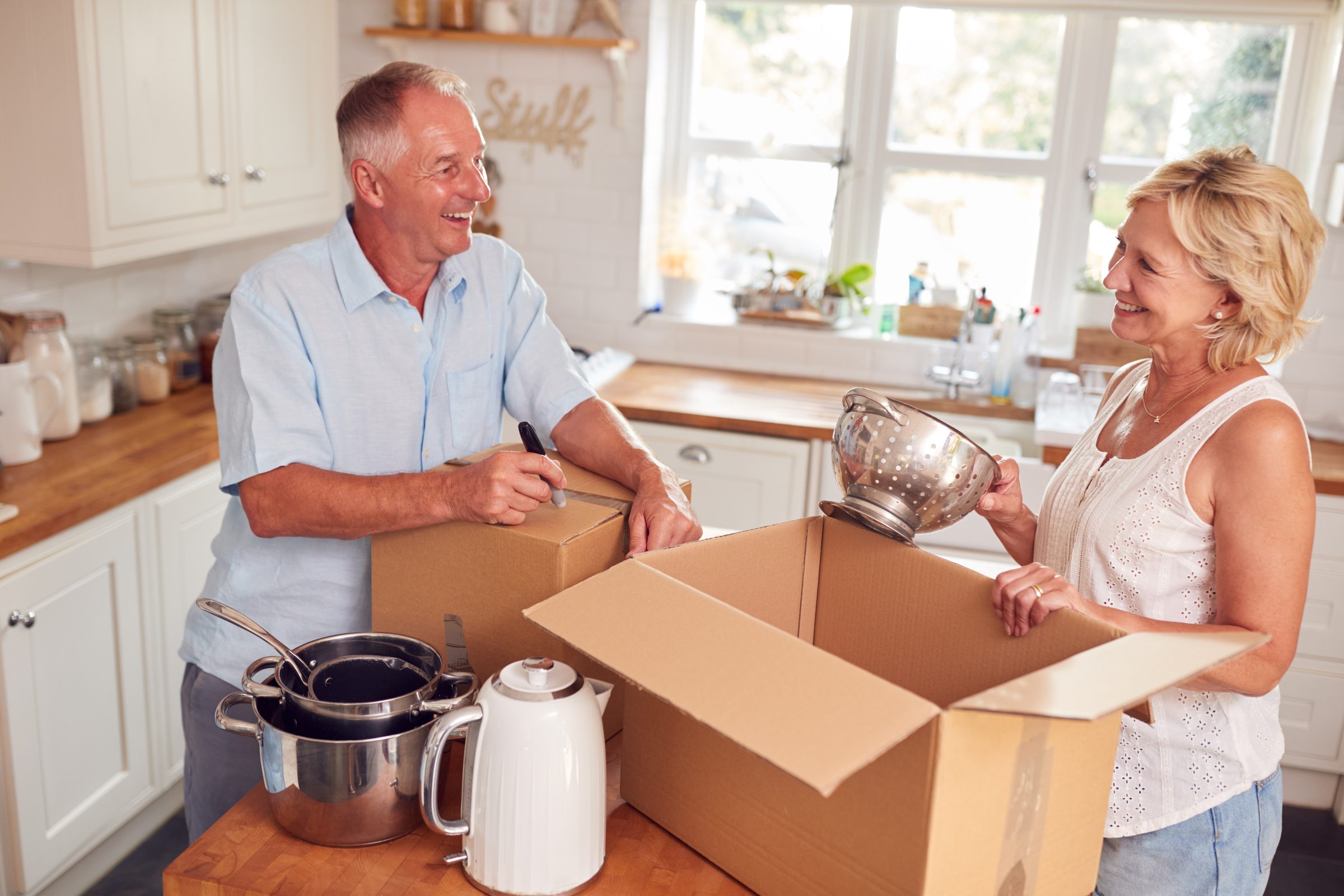
Empty them, dry them completely, remove every detachable part, wrap the blades and glass separately, and box each appliance with its own cord taped to its own body. Small appliances break in transit for three reasons: trapped water, loose parts rattling inside the housing, and a lid that was never secured.
All three are fixed on the counter before the box is even taped. We pack kitchens across Pittsburgh, PA week in and week out, and this is the corner of the room that takes the longest.
Counter appliances get underestimated because they are small and they look sturdy. A stand mixer weighs more than most people expect and has a hinged head that swings in a box. A blender is a motor base, a glass jar, and a blade assembly that all behave differently once a truck is moving.
Clean and Dry Before Anything Goes in a Box
Water is the problem nobody plans for. A coffee maker holds water in its reservoir and its internal lines long after the carafe is empty, a kettle holds it under the element, and a slow cooker holds it in the seal. Any of that left inside for a few days in a sealed carton produces mildew, and in winter it can freeze and crack a housing or a glass insert.
Run the machines empty where you can. Tip a coffee maker upside down over the sink and let it drain, leave the lid open overnight, and do the same with the kettle and the steamer. Crumbs matter nearly as much.
A toaster full of crumbs attracts pests into a box that might sit in a garage or a storage unit for weeks, so empty the tray and turn the whole thing over before it goes anywhere. Grease on an air fryer basket or a griddle plate transfers to cardboard and then to whatever is packed beside it.
Original Packaging, and What to Use Instead
If you kept the box a stand mixer or an espresso machine came in, that is the right container. Manufacturer packaging was cut to hold that specific shape at the points where it carries weight, and nothing you build at home matches it. Most households kept two or three boxes at most, which is normal.
Without the original, use a sturdy carton only slightly larger than the appliance and fill the gap rather than leaving air. Each appliance gets its own box where possible, or at least its own clearly separated layer, with paper between items instead of appliances resting against each other. Pack heavy motor bases at the bottom and lighter things above them.
Our packers work through a kitchen this way as part of room-by-room packing with supplies included, and the kitchen is the room customers most often hand over even when they pack the rest of the house themselves. Writing the appliance name on the carton rather than the word kitchen is the difference between finding the coffee maker on the first morning and opening six boxes to get to it.
Cords, Blades and the Parts That Come Loose
Detachable parts are what turn a working appliance into a broken one. A blade assembly rattling inside a blender jar chips the glass. A mixer head left unlocked swings and cracks its own housing. The rule is to separate, wrap, and reunite, meaning every loose part travels wrapped but inside or taped to the appliance it belongs to.
| Appliance | Prep before packing | How it is boxed |
|---|---|---|
| Blender | Blade assembly off, jar washed and dried | Base, jar and blades wrapped separately, same box |
| Stand mixer | Head locked down, bowl and attachments removed | Mixer in its own carton, attachments bagged beside it |
| Coffee maker | Reservoir drained, carafe removed | Carafe wrapped like glassware, machine padded upright |
| Food processor | Blades and discs off, lid unlocked | Blades wrapped in paper, taped shut, labeled sharp |
| Air fryer or toaster oven | Basket and racks out, crumbs emptied | Racks wrapped flat, unit boxed with door taped shut |
Cords get wrapped loosely and secured against the body of their own appliance with tape or a tie, never coiled tight and never thrown loose in the box. A cord left trailing catches on the carton flap and pulls at the point where it enters the housing, which is exactly where cords fail.
Mark the outside of every carton with what is inside it, since box labeling that saves unpacking time matters more in a kitchen than in any other room.
Would rather the kitchen was already boxed when you got home from work? Add packing to your quote, and our crew brings the cartons, paper, and tape with them.
Glass, Ceramic and Anything That Shatters
A surprising share of a kitchen's fragile weight sits in appliances rather than in the cupboards. Blender jars, coffee carafes, slow cooker inserts, glass lids and the ceramic bowl of a mixer all break the same way, which is from contact with something hard while the truck is moving.
Treat each of those like a dish rather than like part of a machine. Wrap each item individually in paper, pad the bottom of the carton, and stand glass items upright with paper between them instead of lying them flat, where weight lands on the rim. A slow cooker insert is heavy enough that it should never travel inside the outer shell, because the two knock together on every bump and the insert usually wins.
For anything genuinely valuable, a built-in espresso machine or a commercial mixer, we build a crate around the unit rather than trusting a carton to hold it. If you want the broader room covered rather than just the counter, our guide to packing your whole kitchen walks through the cupboards, the pantry and the fragile work.
What Rides With You and What Cannot Ride at All
Keep out whatever you will want in the first twenty-four hours. For most households, that is the kettle or the coffee maker, a couple of mugs and whatever makes breakfast possible, and they travel in your own car rather than on the truck. A first morning in a new place in Lawrenceville or Mt. Lebanon goes better when the coffee does not require finding a box.
A few kitchen items are not allowed on a moving truck at all, and they are not the ones people expect. Propane canisters for a countertop burner, fire extinguishers, aerosols, cleaning chemicals under the sink, and anything flammable stay behind or travel separately, and our list of things we cannot carry on moving day covers the full set.
Perishable food in a fridge or freezer falls into the same category, since a sealed trailer runs hot in summer and cold in winter with no airflow either way. Run the freezer down in the fortnight before the move rather than trying to transport its contents.
Our crews pack kitchens across Lawrenceville, Shadyside, Squirrel Hill, Mt. Lebanon and the South Side most weeks, and professional-grade materials come built into the service rather than added to the bill. Get a free quote online in about two minutes and tell us what is sitting on your counters.