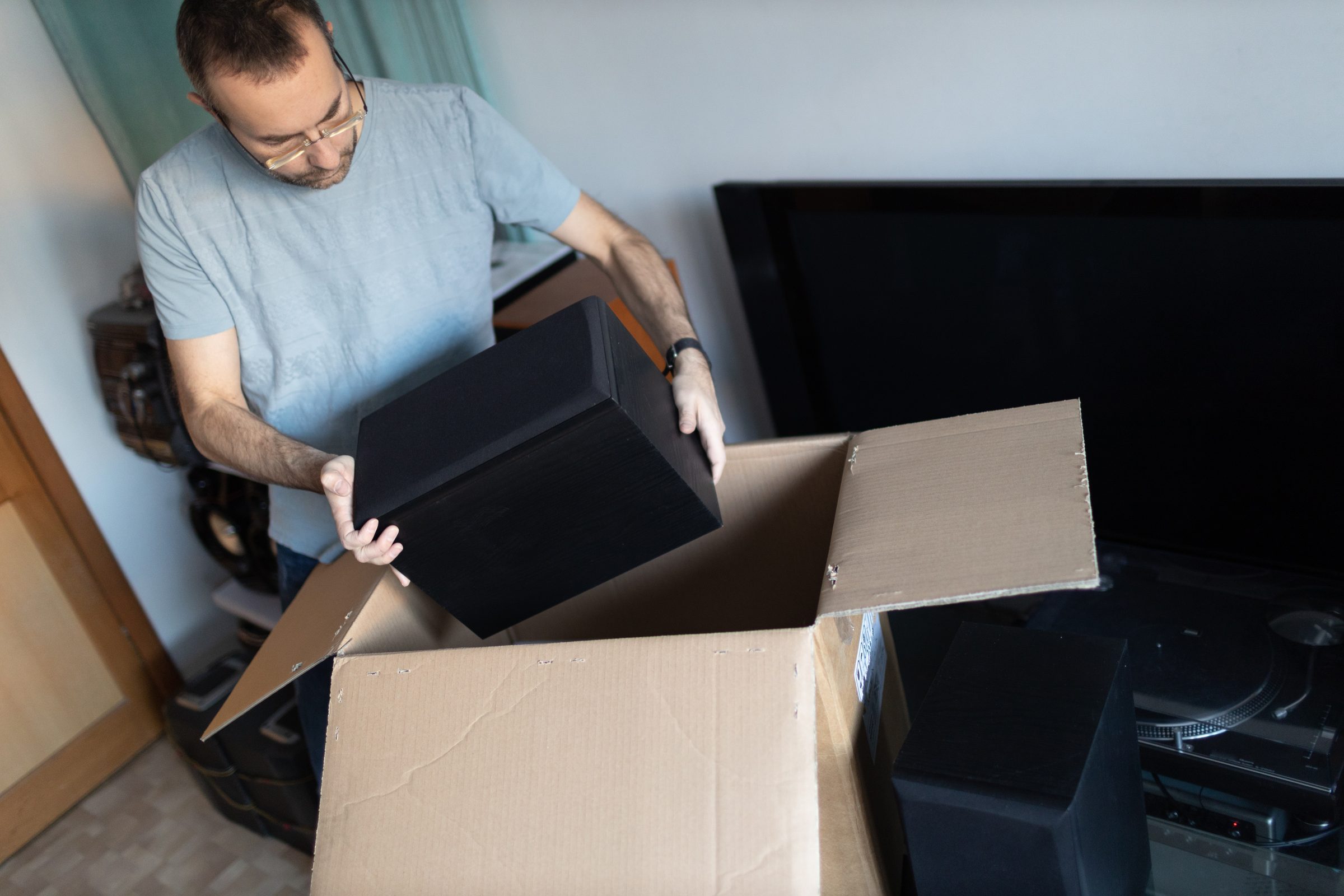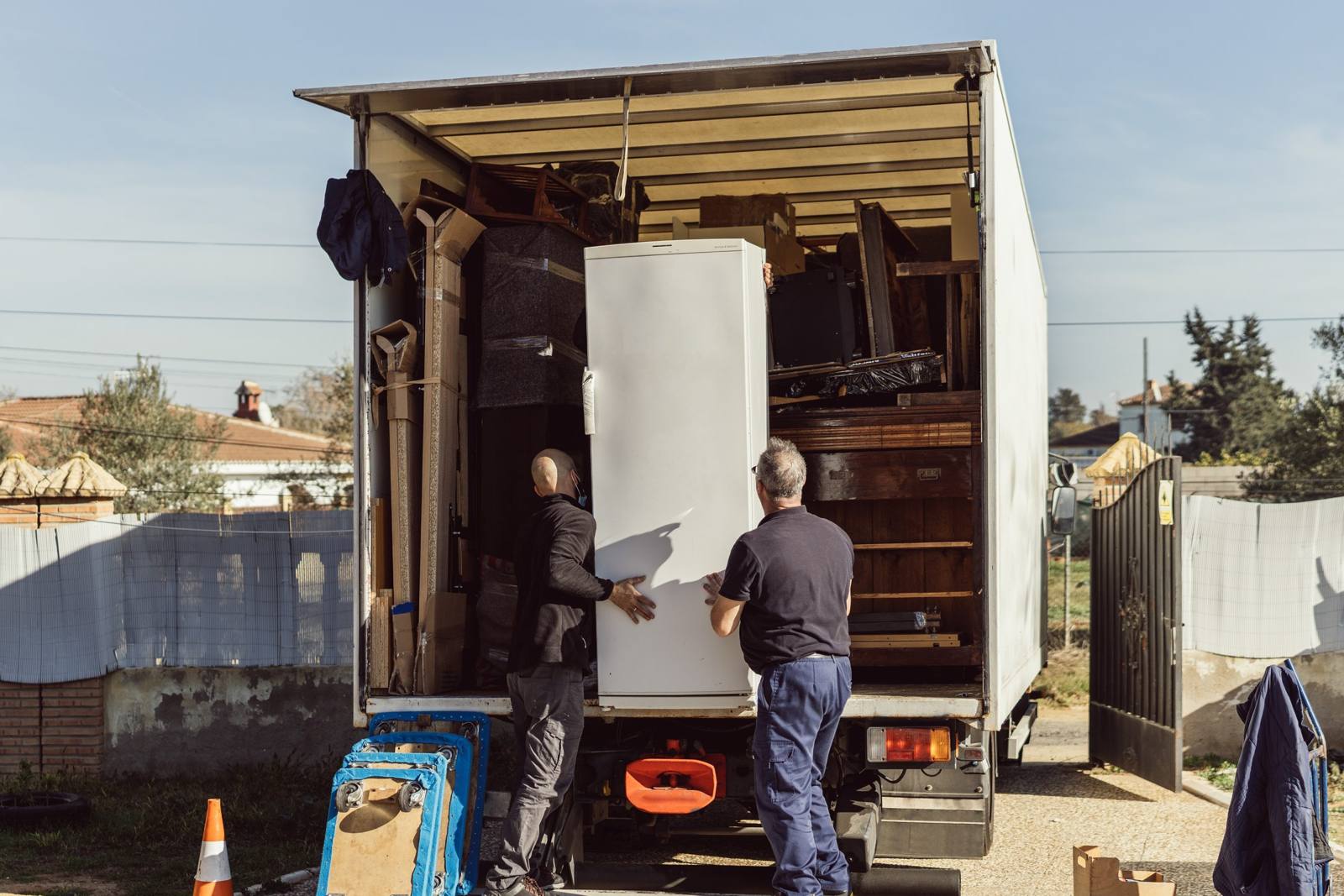
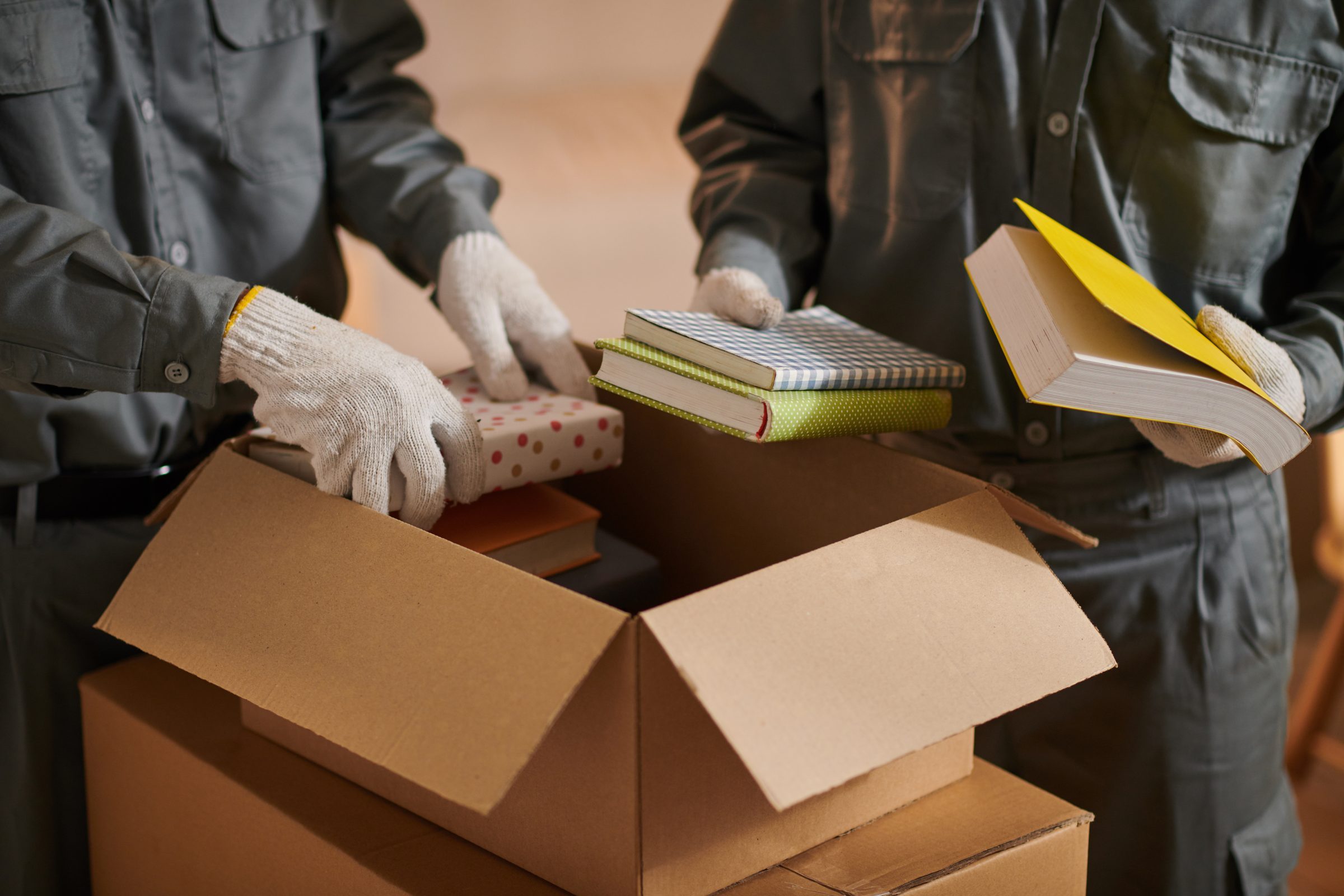
Small boxes, filled to the top, with books laid flat or standing with their spines against the box wall. Never spine up. That is the whole method, and it holds whether you own two shelves or a wall of them.
Books are the densest thing in most homes by volume, which is why they break boxes, strain backs, and get left for last. We pack them on moves across Pittsburgh, PA most weeks, and the boxes we use for a library are the smallest ones on the truck.
The reason this matters more here than in a lot of cities is the housing. A hundred-year-old row house in the South Side or a third-floor walk-up in Shadyside means books come down a narrow stairwell with a turn in it, one box at a time, in somebody's arms.
Small Boxes Only, and the Reason Behind It
A book box, usually around 1.5 cubic feet, exists because a large carton filled with hardbacks becomes something no one can safely lift. Fill a standard large box with books, and you are looking at well over a hundred pounds, which is past the point where the cardboard holds and well past the point where a single person should be carrying it downstairs.
Reinforce the bottom seam with tape before you start loading, running a strip along the seam and a second across it. Books put constant downward pressure on that one line of cardboard for the whole trip, and a blown seam halfway down a flight of steps is how a collection ends up scattered across a landing.
If you are deciding what gets packed first, shelves are an ideal starting point, since almost nothing on them gets used in the final weeks before a move and the job can be done slowly over several evenings.
Three Positions That Work and One That Does Not
The spine is the part of a book that fails, and it fails from pressure applied the wrong way. Laid flat in a stack, the weight sits on the covers, which is fine. Standing upright with the spine against the side of the box, the binding is braced by the cardboard, which is also fine. Spine down, the reinforced edge takes the load, which is the safest option of all for anything valuable.
Spine up is the one to avoid. In that position, the pages hang open, and the weight of everything above presses the text block away from the binding, and after a few hours in a truck, the spine is permanently split. Work through a shelf like this:
- Sort by size, keeping oversized art and reference books in their own box
- Tape the box seams, bottom first, then the sides
- Load the heaviest and largest at the bottom, lighter volumes above
- Fill every gap with packing paper so nothing slides in transit
- Write the room and a rough weight on the outside of the box
Packing paper in the gaps does more than cushion. A half-empty book box lets the contents shift as a hand truck goes over a curb, and shifting is what bends corners and dents covers. Fill it to the top, even if that means using paper rather than more books.
Heavy Boxes Meet Pittsburgh Stairs
Local moves here are billed by the hour, and nothing slows an hourly crew like a box that takes two people to move. Keep book boxes around 30 to 40 pounds, which for most people means filling a small box about three-quarters full and topping it with paper. A box you can lift comfortably is a box that gets carried in one trip instead of two.
Mixing helps when you have more books than small boxes. Split loads work well, where a layer of books sits at the bottom of a medium carton and lighter household items like linens or towels fill the rest. The weight stays low in the box, the total stays manageable, and you use containers you already had.
On the truck, book boxes go on the floor of the load rather than on top of anything, because their weight is what crushes whatever sits beneath them. Boxes that are sorted and stacked by room come off in the right order, which matters when the heaviest boxes in the house all need to end up in the same study.
Would rather not carry forty boxes of books down a stairwell? Add packing to your quote, or book us for the heavy lifting on its own.
Rare Books, Paperbacks and Everything Between
Most of a collection is ordinary and travels fine with the method above. The exceptions are worth separating out early.
Anything signed, first edition, leather-bound, or inherited gets wrapped individually in acid-free tissue or plain packing paper, never newsprint, since the ink transfers onto page edges and cloth bindings. Those books go spine down in a double-walled box of their own, loaded last and unloaded first.
Paperbacks are more fragile than their price suggests. The covers curl and the glue bindings crack when they are bent, so pack them flat in layers or spine down rather than wedging them upright where they can lean.
Oversized art books and atlases should always lie flat, stacked largest at the bottom, with nothing heavy on top of them. If the collection is large or genuinely valuable, our packers can handle it room by room, and our packing service and supplies include protective materials and custom crating for pieces that need more than a carton.
Loading, Storage and Getting the Shelves Back Up
Bookshelves themselves need attention before the books come off them. Most flat-pack shelving does not survive being moved assembled, so it comes apart, and the shelf pins and hardware go into a labeled bag taped to the largest panel. Solid wood shelving usually travels whole, wrapped in blankets, with the shelves removed and padded separately.
When books have to sit somewhere between homes, humidity is the thing that ruins them rather than the move itself. Paper absorbs moisture from the air, and a few weeks in an unconditioned space is enough to warp covers and start mildew in a sealed box.
Climate control is the difference, along with keeping boxes off a concrete floor. If you are handling the drive yourself and only need the load and unload covered, we also put movers by the hour on rental trucks, containers, and storage units, which is a common choice for a book-heavy move where the furniture is straightforward but the boxes are brutal.
Our crews work the hills, stairwells, and tight streets of Lawrenceville, Squirrel Hill, Mt. Lebanon, and the South Side every week, and we bring the small boxes that a library actually needs. Get a free quote online in about two minutes and tell us how many shelves you are dealing with.